Resolving Drop-offs in Flipkart’s Login Flow
Resolving Drop-offs in Flipkart’s Login Flow
Resolving Drop-offs in Flipkart’s Login Flow
The login and sign-up process is critical as it’s one of the first interactions users have with the Flipkart app. The previous flow had a high drop-off rate, with only ~40% completing it. To address this, our team streamlined the flow, reducing taps. Introducing a Truecaller login improved completion rates but led to many uers dropping off, which I was responsible for resolving.
The login and sign-up process is critical as it’s one of the first interactions users have with the Flipkart app. The previous flow had a high drop-off rate, with only ~40% completing it. To address this, our team streamlined the flow, reducing taps. Introducing a Truecaller login improved completion rates but led to many uers dropping off, which I was responsible for resolving.
The Challenge
The Challenge
The Challenge
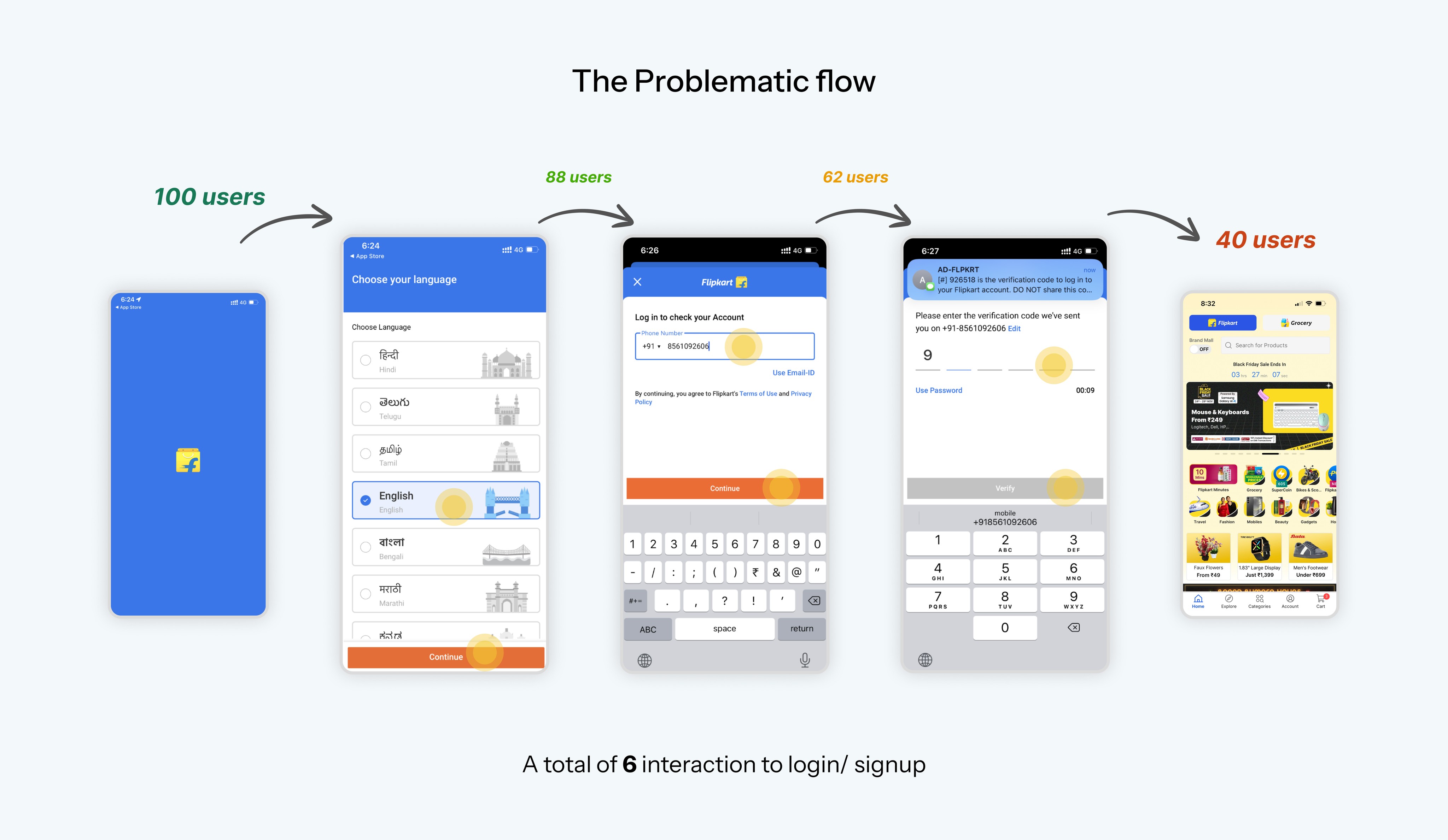
The original flow was too lengthy and required users to perform multiple taps, leading to a high drop-off rate. With so many steps, users dropped off at various stages, and only about 40% managed to complete the process.
The original flow was too lengthy and required users to perform multiple taps, leading to a high drop-off rate. With so many steps, users dropped off at various stages, and only about 40% managed to complete the process.
The original flow was too lengthy and required users to perform multiple taps, leading to a high drop-off rate. With so many steps, users dropped off at various stages, and only about 40% managed to complete the process.
Step 1: Introducing Truecaller for a Seamless Experience
Step 1: Introducing Truecaller for a Seamless Experience
Step 1: Introducing Truecaller for a Seamless Experience
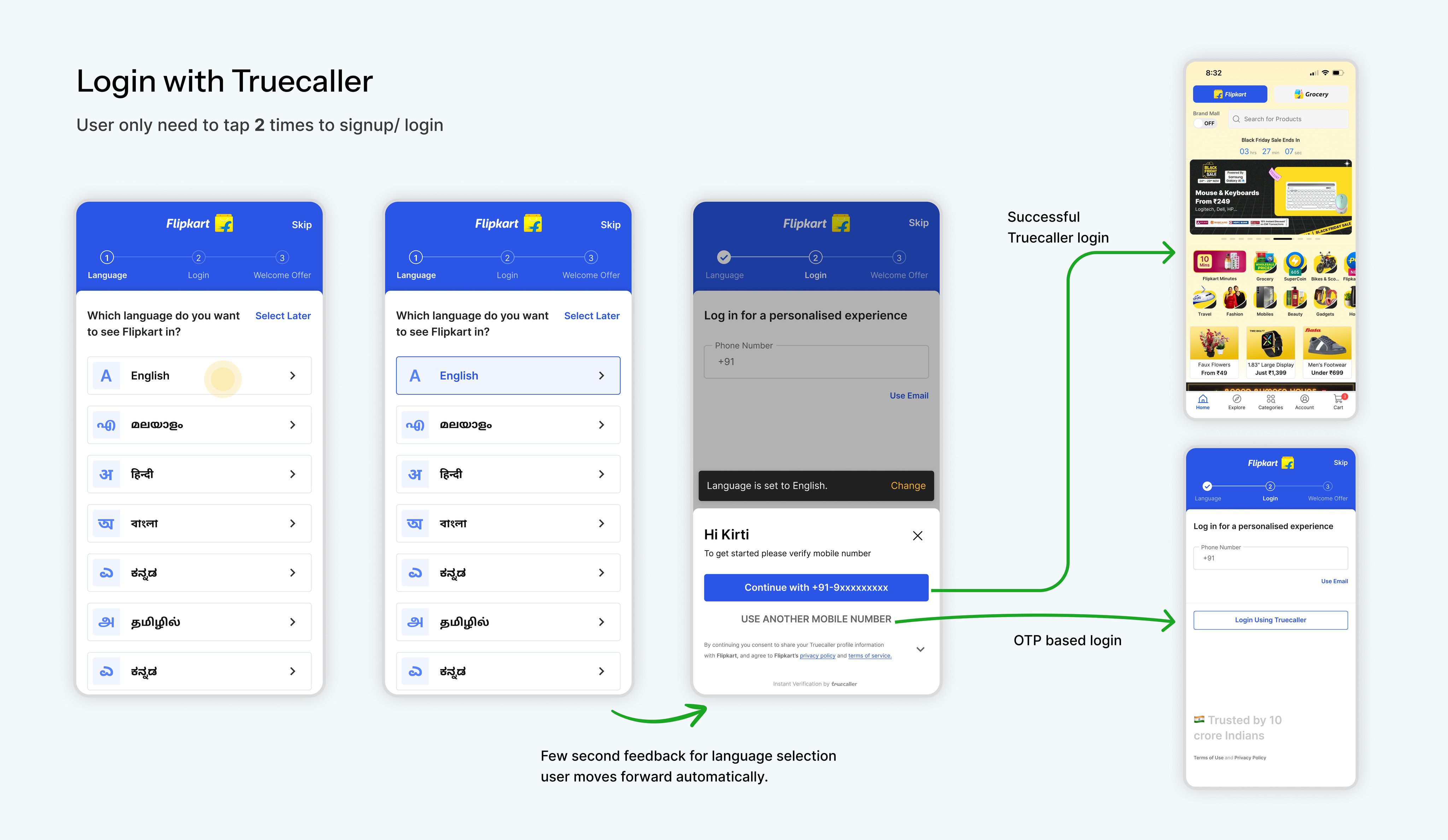
To improve the drop-off rate, we introduced Truecaller as an option. The updated flow allowed users to:
- Select their language.
- Automatically proceed to the login page, where a bottom sheet would auto-appear, asking users to continue with Truecaller or dismiss and use the traditional phone number and OTP method.
This auto-triggered bottom sheet significantly reduced the number of taps required. In an A/B test, we saw promising results:
70% of users chose to proceed with Truecaller, leading to more seamless sign-ins.
However, the bounce rate on the login page spiked to 16%, with many users exiting the app after seeing the auto-triggered Truecaller prompt.
To improve the drop-off rate, we introduced Truecaller as an option. The updated flow allowed users to:
- Select their language.
- Automatically proceed to the login page, where a bottom sheet would auto-appear, asking users to continue with Truecaller or dismiss and use the traditional phone number and OTP method.
This auto-triggered bottom sheet significantly reduced the number of taps required. In an A/B test, we saw promising results:
70% of users chose to proceed with Truecaller, leading to more seamless sign-ins.
However, the bounce rate on the login page spiked to 16%, with many users exiting the app after seeing the auto-triggered Truecaller prompt.
To improve the drop-off rate, we introduced Truecaller as an option. The updated flow allowed users to:
- Select their language.
- Automatically proceed to the login page, where a bottom sheet would auto-appear, asking users to continue with Truecaller or dismiss and use the traditional phone number and OTP method.
This auto-triggered bottom sheet significantly reduced the number of taps required. In an A/B test, we saw promising results:
70% of users chose to proceed with Truecaller, leading to more seamless sign-ins.
However, the bounce rate on the login page spiked to 16%, with many users exiting the app after seeing the auto-triggered Truecaller prompt.
Step 2: Solving the Drop-off Issue
Step 2: Solving the Drop-off Issue
Step 2: Solving the Drop-off Issue
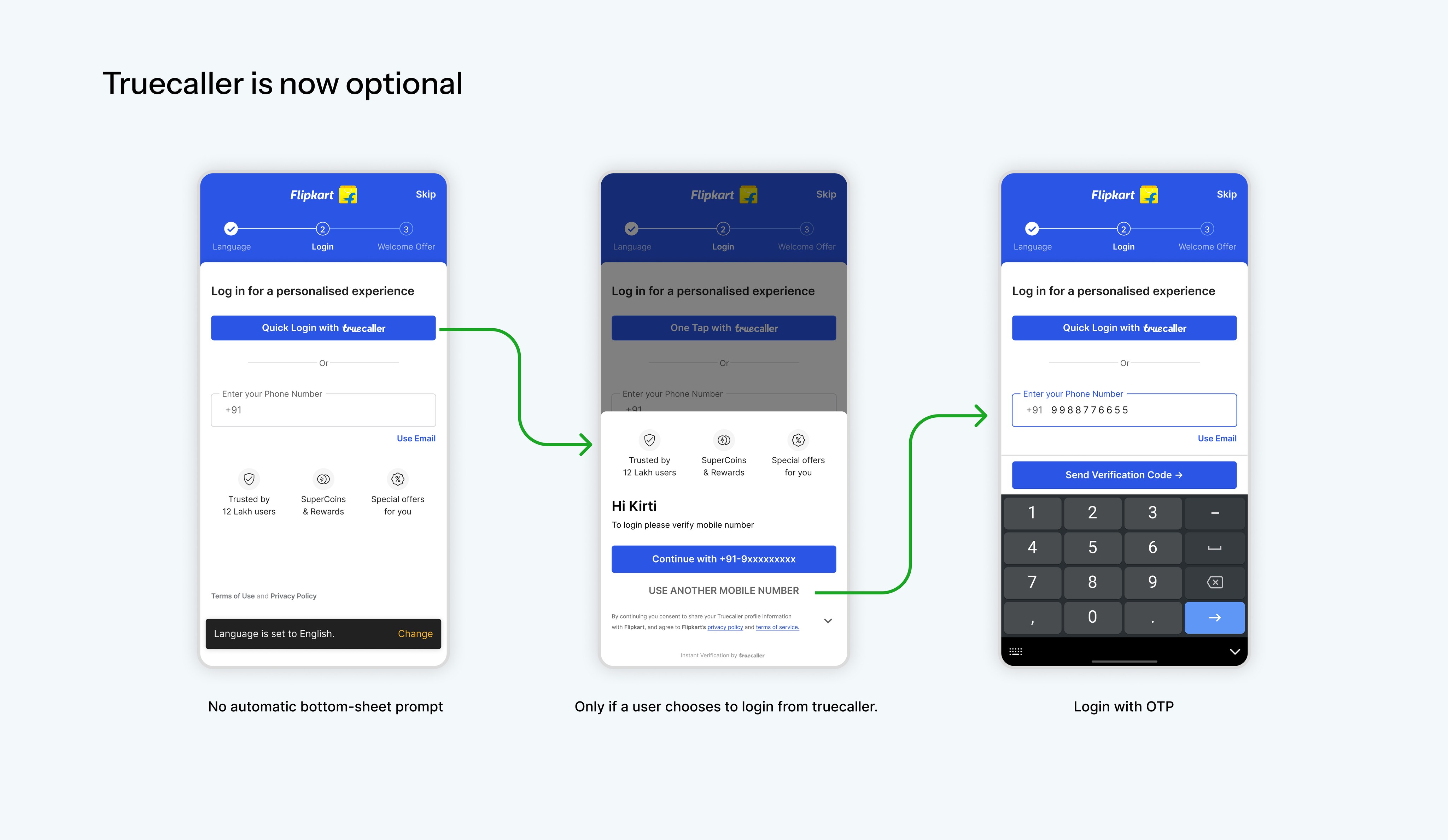
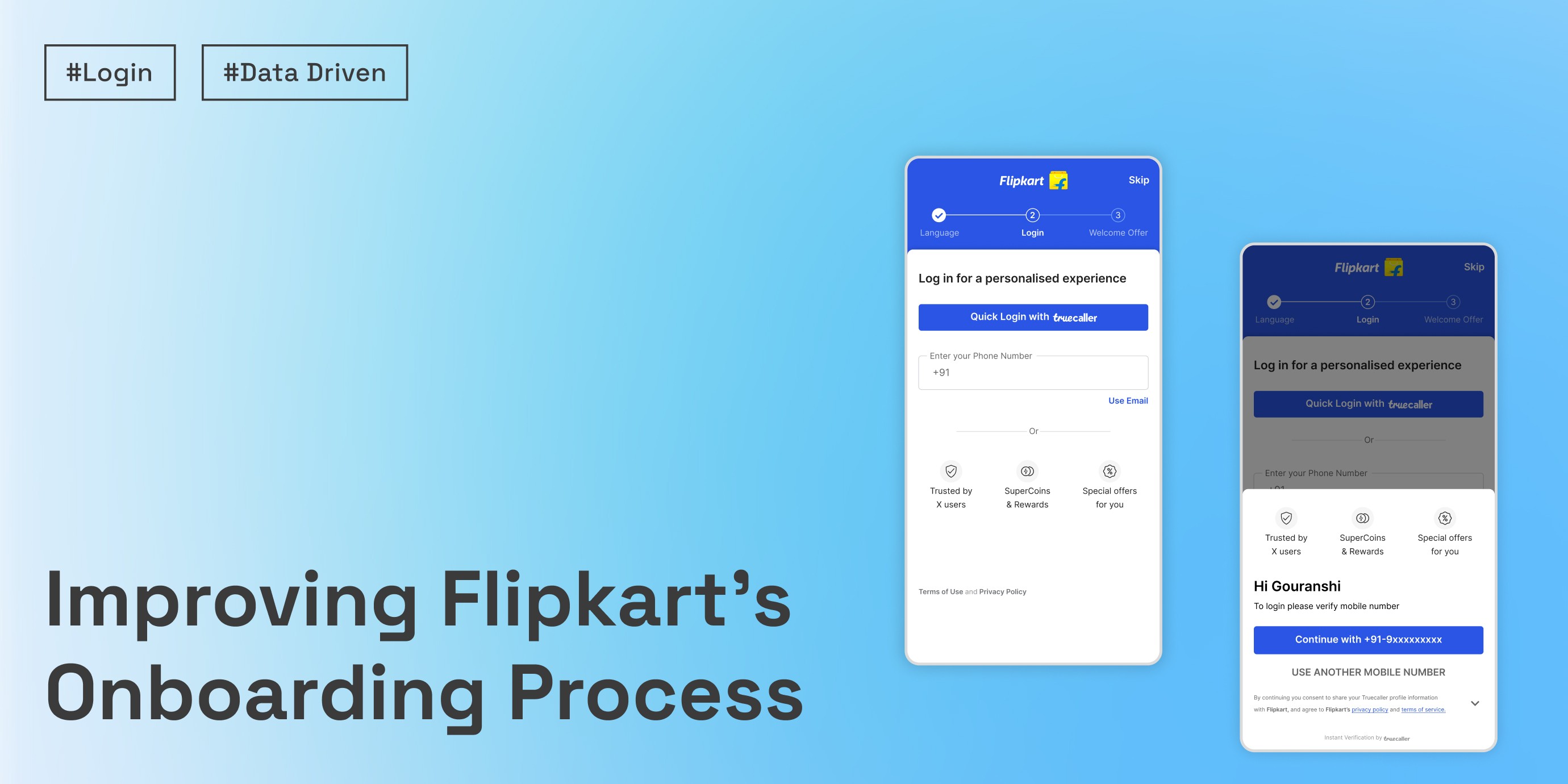
With the increased drop-off rate on the login page, I took on the challenge of refining this step. We hypothesized that the auto-appearing Truecaller prompt was overwhelming users, causing them to exit.
To address this, I decided to introduce a more user-controlled experience. Instead of the auto-triggered bottom sheet, we added a clear call-to-action button on the login page that said, "Login with Truecaller." If the user opted for this, only then would the Truecaller bottom sheet appear, allowing them to proceed.
With the increased drop-off rate on the login page, I took on the challenge of refining this step. We hypothesized that the auto-appearing Truecaller prompt was overwhelming users, causing them to exit.
To address this, I decided to introduce a more user-controlled experience. Instead of the auto-triggered bottom sheet, we added a clear call-to-action button on the login page that said, "Login with Truecaller." If the user opted for this, only then would the Truecaller bottom sheet appear, allowing them to proceed.
With the increased drop-off rate on the login page, I took on the challenge of refining this step. We hypothesized that the auto-appearing Truecaller prompt was overwhelming users, causing them to exit.
To address this, I decided to introduce a more user-controlled experience. Instead of the auto-triggered bottom sheet, we added a clear call-to-action button on the login page that said, "Login with Truecaller." If the user opted for this, only then would the Truecaller bottom sheet appear, allowing them to proceed.
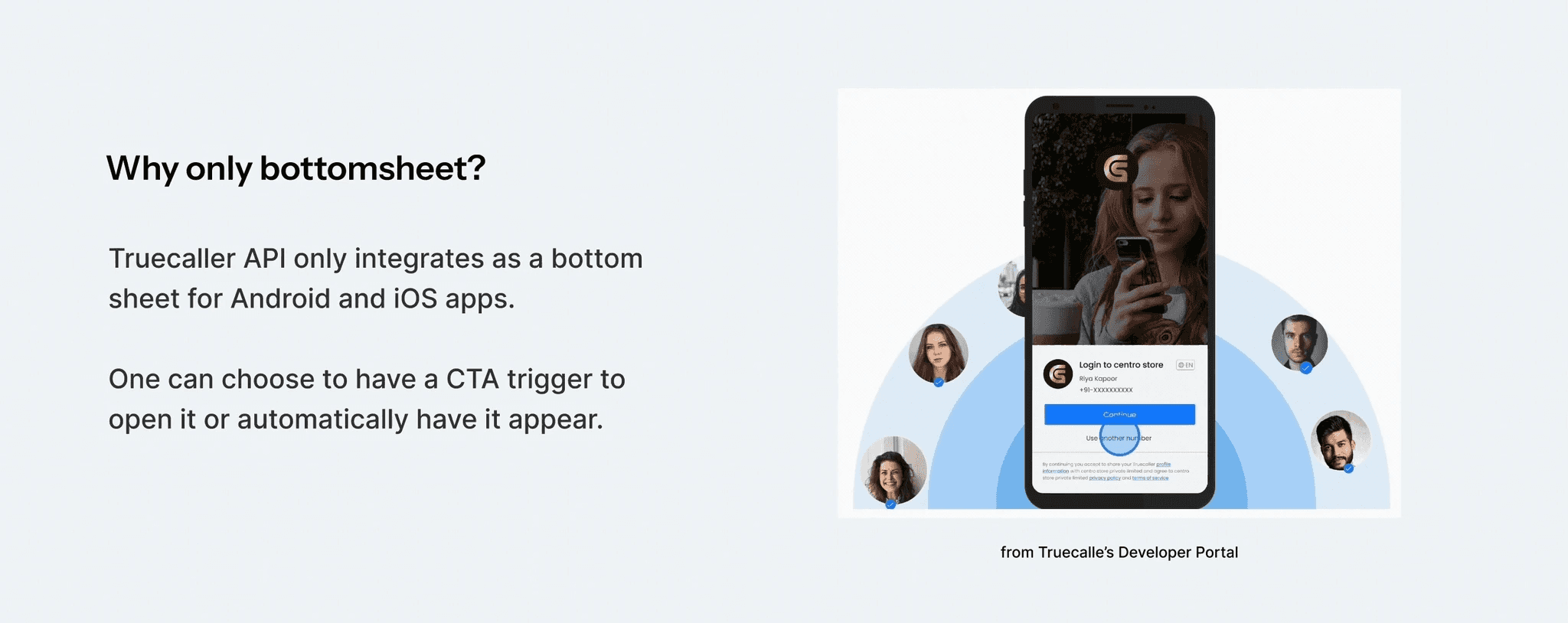
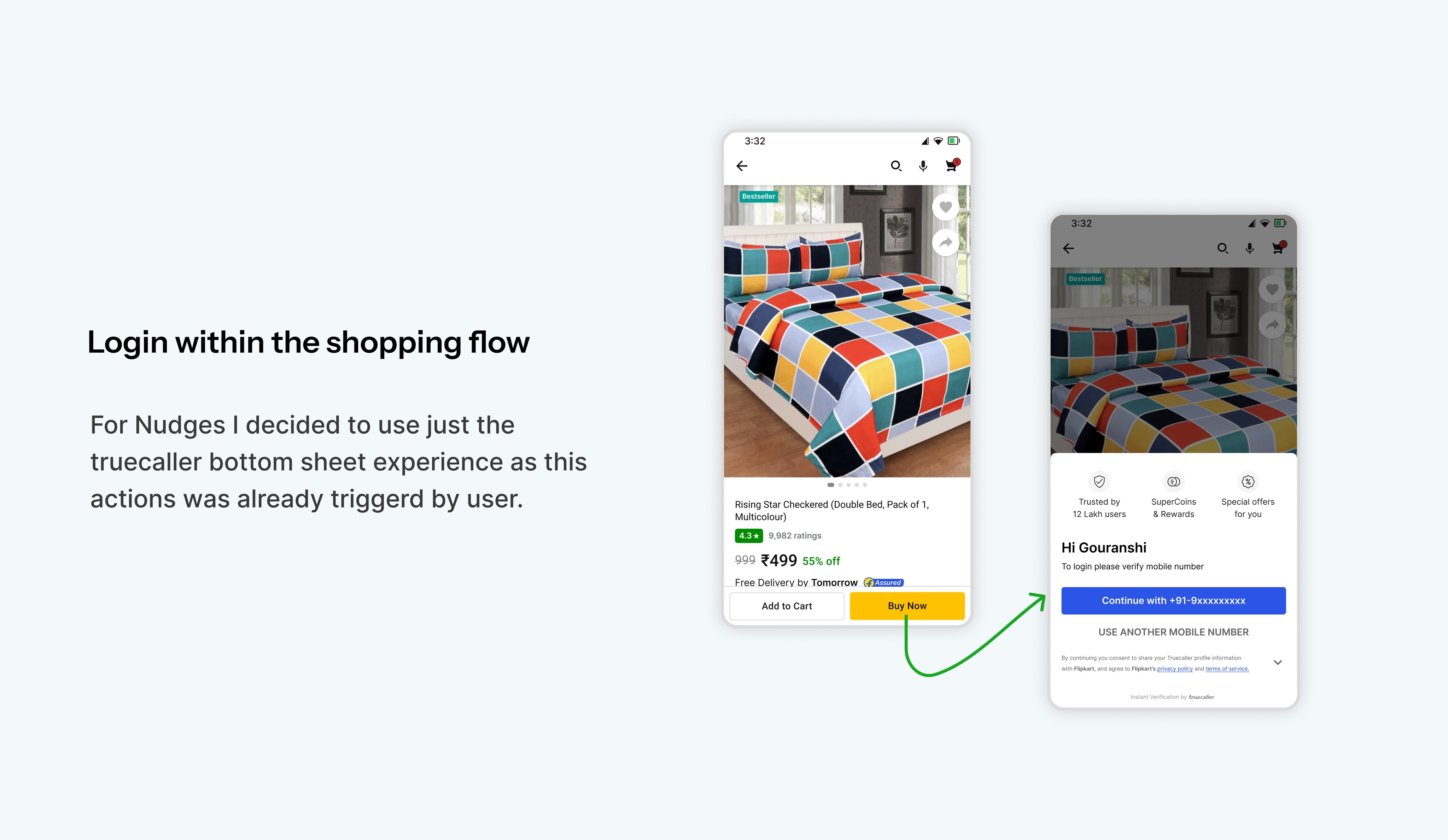
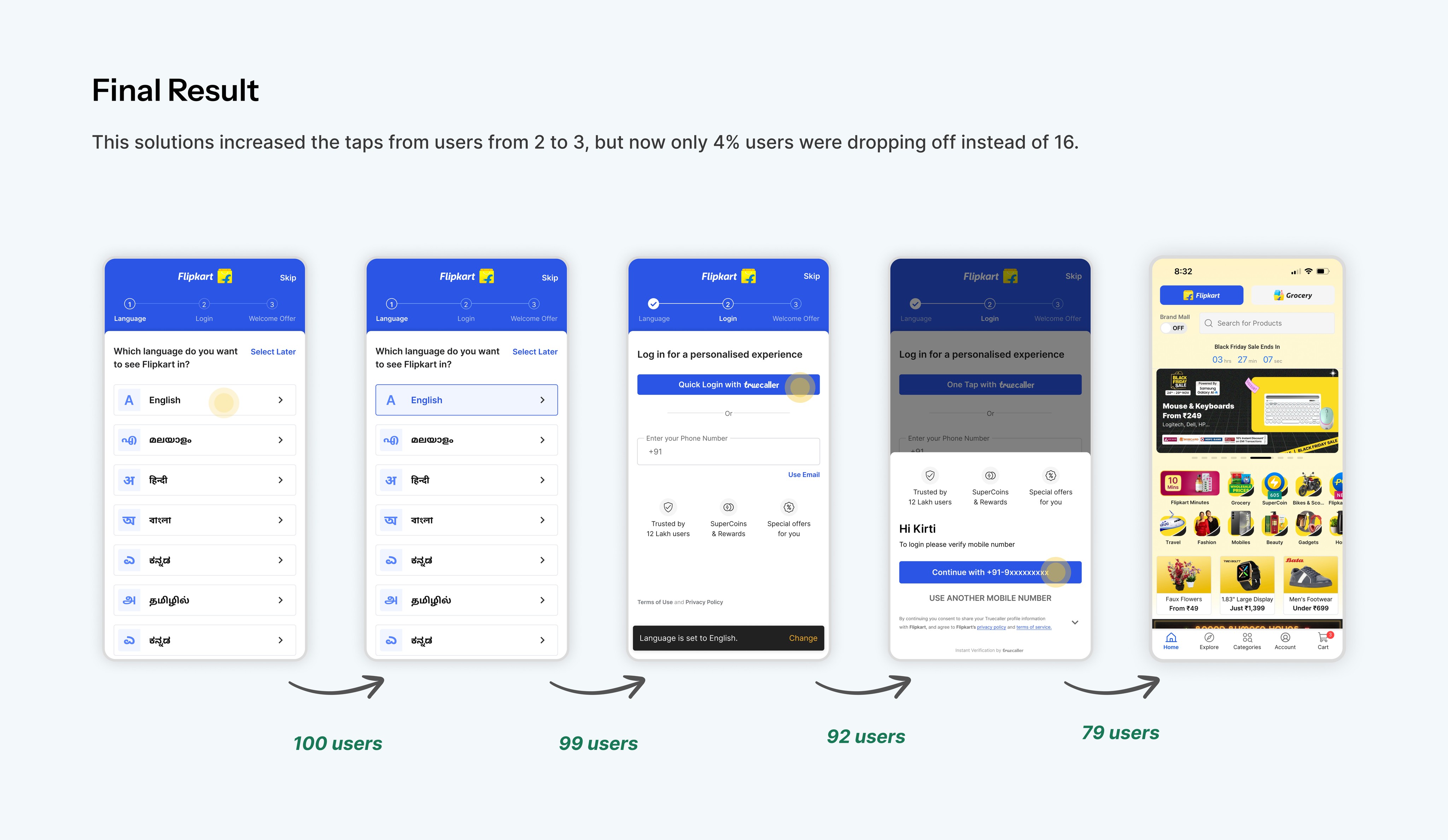
The impact of this change was immediate. After rolling out the revised flow:
The bounce rate on the login page dropped significantly from 16% to 4%.
Users appreciated having more control over the Truecaller login, and the overall flow felt less disruptive.
The impact of this change was immediate. After rolling out the revised flow:
The bounce rate on the login page dropped significantly from 16% to 4%.
Users appreciated having more control over the Truecaller login, and the overall flow felt less disruptive.
The impact of this change was immediate. After rolling out the revised flow:
The bounce rate on the login page dropped significantly from 16% to 4%.
Users appreciated having more control over the Truecaller login, and the overall flow felt less disruptive.
Key Takeaways
Key Takeaways
Key Takeaways
- Simplifying the user journey by reducing taps can have a massive positive impact, but it's important to balance convenience with user control.
- Introducing Truecaller solved the initial drop-off issue, but careful iteration was required to reduce the drop-off effect.
- Collaboration with the engineering team was key, as I came into the project after Step-1 had been designed and implemented, allowing me to focus on solving a specific problem.
This project taught me the importance of A/B testing and being adaptable when unforeseen issues arise during a rollout.
In the end, it wasn’t just about reducing steps but about giving users a smoother, more intuitive experience.
- Simplifying the user journey by reducing taps can have a massive positive impact, but it's important to balance convenience with user control.
- Introducing Truecaller solved the initial drop-off issue, but careful iteration was required to reduce the drop-off effect.
- Collaboration with the engineering team was key, as I came into the project after Step-1 had been designed and implemented, allowing me to focus on solving a specific problem.
This project taught me the importance of A/B testing and being adaptable when unforeseen issues arise during a rollout.
In the end, it wasn’t just about reducing steps but about giving users a smoother, more intuitive experience.
- Simplifying the user journey by reducing taps can have a massive positive impact, but it's important to balance convenience with user control.
- Introducing Truecaller solved the initial drop-off issue, but careful iteration was required to reduce the drop-off effect.
- Collaboration with the engineering team was key, as I came into the project after Step-1 had been designed and implemented, allowing me to focus on solving a specific problem.
This project taught me the importance of A/B testing and being adaptable when unforeseen issues arise during a rollout.
In the end, it wasn’t just about reducing steps but about giving users a smoother, more intuitive experience.
Copywhatever
Copywhatever
Copywhatever
Gouranshi, 2025(just don’t steal)
Gouranshi, 2025(just don’t steal)
Gouranshi, 2025(just don’t steal)